

At a Glance: The Brand Profile
| Metric | Details |
| :--- | :--- |
| Founders | Scott Seamans, Lyndon "Duke" Hanson, George Boedecker Jr. |
| Founded | 2002 (Boulder, Colorado) |
| The "Product" | The "Beach" Clog (made of Croslite foam) |
| The Low Point | Near bankruptcy in 2008-2009 |
| The Turning Point | Embracing the "ugly" and focusing on personalization (Jibbitz) |
| Current Status | A $6+ Billion Global Fashion Powerhouse |
The Hook: The Shoe Everyone Loved to Hate
In 2006, if you wore Crocs in public, you were making a statement. And that statement was usually, "I have given up."
They were bulbous, brightly colored, and riddled with holes. Time magazine listed them as one of the "50 Worst Inventions." The movie Idiocracy used them as the official footwear of a dystopian, dumbed-down future because the costume designer thought they were "horrible" and cheap.
Yet, today, they are worn by Justin Bieber, Post Malone, and supermodels on runways.
How did a brand go from being a global punchline to a Gen Z fashion staple? The answer isn't slick marketing. It's a lesson in radical self-acceptance.
The Origin: Function Over Form
The story starts on a boat trip in the Caribbean in 2002. The three founders were sailing and realized they needed a shoe that didn't slip on wet decks, didn't absorb water, and didn't smell.
They found a Canadian company that had developed a peculiar foam resin called "Croslite." It was lightweight, antimicrobial, and molded to the foot. It was perfect.
They bought the rights and designed the "Beach" clog. It wasn't trying to be pretty; it was trying to work. At their first boat show in Fort Lauderdale, they sold all 200 pairs. People didn't care how they looked—they cared how they felt.

The Crash: When the Fad Died
The initial success was a curse. Crocs expanded too fast. They tried to make high heels, leather shoes, and apparel. They lost their identity.
By 2008, the Great Recession hit, and the "Crocs fad" was over. The company was sitting on millions of dollars of unsold inventory. Their stock price plummeted from $75 to barely $1. They were weeks away from missing payroll.
The world had decided Crocs were "over."
The Human Pivot: Embracing the "Ugly"
In a desperate attempt to save the company, new leadership made a counter-intuitive decision. Instead of trying to make Crocs "cool" or "normal," they doubled down on what made them different.
They realized their core customers—nurses, chefs, gardeners, and kids—didn't care about fashion. They cared that they could stand for 12 hours without pain.
Crocs stopped apologizing for being ugly. They launched a campaign with the tagline: "Ugly can be beautiful."
It was a masterclass in human psychology. By owning the insult, they took the power away from their critics. Wearing Crocs became a counter-culture statement of confidence.
The Genius Strategy: Jibbitz and Collabs
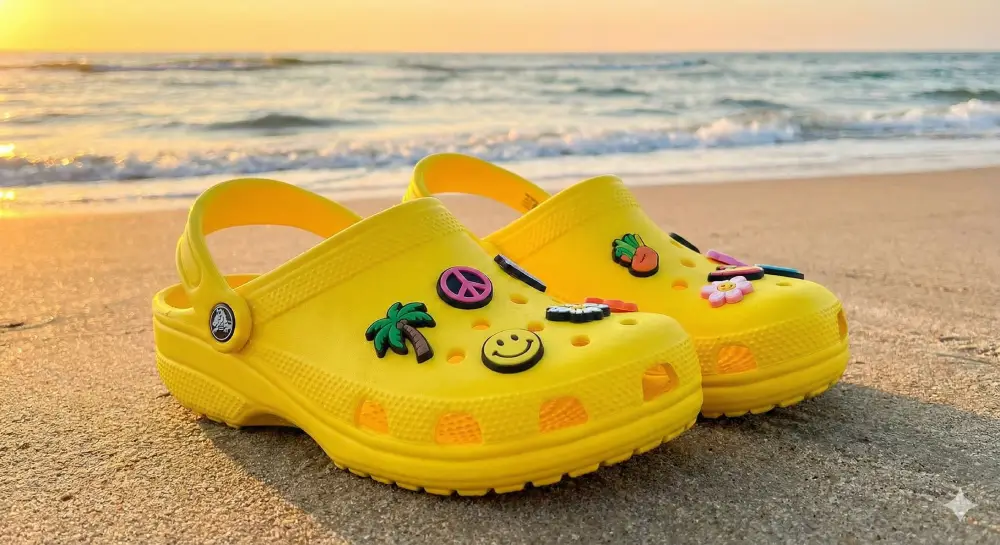
The final piece of the puzzle was personalization. Crocs bought a small company started by a mom who was shoving clay charms into her kids' shoes. They renamed them Jibbitz.
Suddenly, a $50 pair of foam clogs became a $100 canvas for self-expression. You weren't just buying shoes; you were curating a personality.
Then came the collaborations. Instead of partnering with safe athletes, they partnered with polarizing figures like Post Malone and high-fashion brands like Balenciaga (who made a $850 platform Croc).
The strategy was brilliant: Use limited-edition drops to create hype, and use the classic clog to drive mass profit.
3 Lessons for Brand Builders in 2026
1. It is Better to Be Polarizing Than Boring
The worst thing a brand can be is forgettable. The people who hated Crocs talked about them just as much as the people who loved them. That "hate" was free publicity that kept the brand alive.
2. Your "Flaw" Is Your Best Feature
Crocs tried to hide their weirdness and failed. When they celebrated it, they won. Identify the thing people criticize about your product, and figure out how to frame it as a superpower.
3. Listen to Your "Superusers," Not the Critics
Crocs survived because nurses and chefs kept buying them when fashion magazines were mocking them. Build for the people who need your product, not the people who just comment on it.
FAQ: The Crocs Brand Story
Q: What are Crocs actually made of?
A: They are not rubber or plastic. They are made of a proprietary closed-cell resin called Croslite. This is why they are so light, don't absorb water, and resist odors.
Q: Why do Crocs have holes in them?
A: The original design was for boating. The holes were functional—they allowed water and sand to drain out quickly. Today, they serve a second purpose: ventilation and holding Jibbitz charms.
Q: How much is the Crocs brand worth today?
A: As of early 2026, Crocs Inc. has a market capitalization of over $6 Billion, proving that comfort is a very lucrative business.
Share this article